Museum Memories Blog: A Victorian Easter
27 Arpil 2026
By Rachel Webber
Longer days, chocolate eggs, flowers and bunnies… it must be Easter time! But where does Easter originate from and why do we eat chocolate eggs and hot cross buns?
Easter itself is an important time in the Christian faith- even more so than Christmas. With the crucifixion of Jesus Christ on Good Friday along with his resurrection on Easter Sunday. Easter officially begins 40 days before on Ash Wednesday, when Lent begins. Before the Victorians Lent was a sombre time of fasting, prayer and personal reflection. Easter Sunday is a day of immense joy and hope as Christians celebrate the light after darkness. Its importance to Victorians is shown by creating two bank holidays for Good Friday and Easter Monday in 1871.
So where do we get the name of easter from? Well it comes from the pagan fertility goddess Eostre (pronounced ee-oh-st-ruh). Very little is known about her as the Saxons were dreadful at writing things down! She represents spring and natures rebirth with her traditional colours of green, yellow and purple. In art she is often pictured with hares and eggs which symbolised fertility and new life. Just like Christmas, the Victorians managed to incorporate both pagan and Christian beliefs and tie them up in a family orientated colourful holiday that all the family can enjoy!
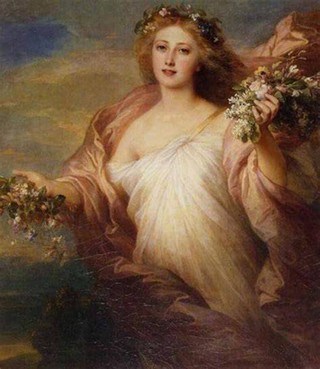 ‘The Spring’ by Franz Xaver Winter Winterhalter 1851
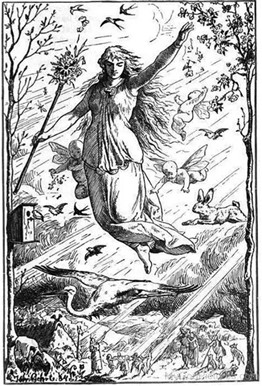 'Ostara’ by Johannes Gherts 1901
One of the Victorians favourite traditions was the easter egg hunt. Eggs are symbolic with new life and representing the empty tomb of Jesus Christ. During the Medieval period eggs were banned during Lent, so when Easter Sunday came great feast of egg dishes were served. However, easter egg hunts originated in Germany in the 16th century. With the Protestant reformer Martin Luther organising egg hunts to his congregation. The men would hide the eggs while women and children would find them. Symbolising the plight of the Virgin Mary who searched for Jesus tomb. Throughout the centuries we see how the egg hunts evolve to the easter hare and later the easter bunny. The bunny would hide the brightly coloured eggs in the gardens of children who were good all year (hmm sound familiar!). We know that Queen Victoria, whose mother was a German Dutchess, searched for eggs in the gardens of Kensington Palace, her childhood home. While she continued this tradition with her own family as Prince Albert hid eggs in little moss baskets all over Windsor Castle and its gardens.
The origin of decorating eggs is hard to pinpoint but we know that King Edward I gifted 450 gold eggs decorated in gold leaf, to his royal household in 1290. But how did the Victorians decorate their eggs? There was no Hobbycraft, glitter or felt tip pens and paint was very expensive - so they had to use more natural methods. Using real hard-boiled eggs and natural dyes such as cranberries, beetroot, lemon peels. A popular way was to boil the eggs in onion skins which would give them a lovely rich golden colour. Once they decorated their eggs the children would play ‘Egg Rolling’. This involved the children rolling their eggs down a hill to see would go the furthest. The winner would receive a prize!
And we now come to many people’s favourite part of easter- the mighty chocolate egg. They were first introduced to the world by both Germany and France in the early 1800s. We had to wait another 70 years for them to appear in the UK when Frys Chocolate created the first chocolate easter egg. Cadbury followed two years later in 1875. It would have tasted rather different to today’s eggs, with a dark chocolate surface covered in sugar drops and marzipan flowers for decoration (see picture). The Victorians were quick to monetise on this by making the eggs bigger and more elaborate. Queen Victoria in her diary wrote how her youngest daughter Beautrice was delighted to receive a doll inside her egg!
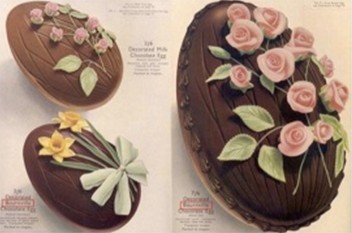 Example of Victorian Easter egg
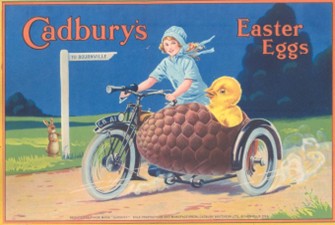 Cadbury Easter advert, 1925
Sticking to the food theme we come to hot cross buns. Traditionally they should only be eaten on the morning of Good Friday as a post Lent treat- do you stick to this tradition? Round about the same recipe has been used since the Medieval times. Many people at the time used to hang hot cross buns in their kitchen to protect them from any evil spirits. Also to stop the food going moldy and to keep the kitchen running efficiently! However did you know that hot cross buns are not meant to be eaten hot (gasp!)? In the late Georgian London, some clever women street vendors decided to roast the hot cross buns to entice passers by. They even created a street ballad that was later turned into a nursery rhyme that is still widely know today. It goes…
Hot cross buns!
Hot cross buns!
One a penny, two a penny,
Hot cross buns!
If you have no daughters,
give them to your sons,
One a penny, two a penny,
Hot cross buns!
Another tasty Victorian treat was Simnel cake. Consisting of a light fruit cake with a marzipan layer in the middle and on top. Decorated with eleven marzipan balls (or eggs) symbolising Jesus disciples – minus Judas of course. Simnel cake has existed since the Medieval times when they would use the finest white flour. It had a revival in the Victorian period and became a popular mother’s day cake for Victorian children to gift to their mothers.
Finally we come to easter cards- though not very popular in today's modern world - the Victorians loved to send them. With the Penny post created in 1840, Easter alongside Christmas became the perfect time to monetise the postal service. The 1870s saw the introduction of the half penny stamp which made Easter cards affordable for almost everyone. They would be bright and colourful featuring religious iconography such as lambs, crosses and cherubs. While other featured scenes of spring time, bunnies, flowers and chicks. However the Victorians in their nature could be rather dark and macabre- shown here by these morbid Easter cards they created.
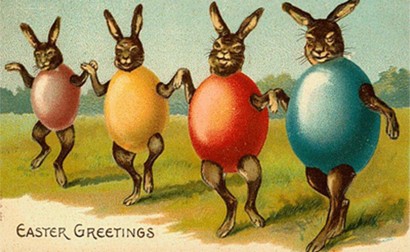
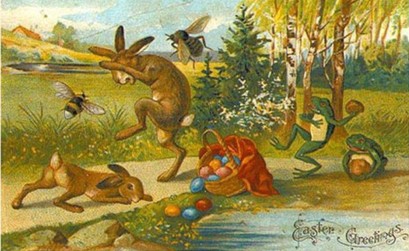
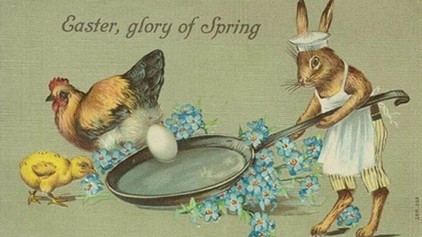
To conclude we can see just how much the Victorians have shaped our way of celebrating the Easter period. From creating bank holidays, to gifting us the joys of chocolate eggs and Easter egg hunts. To put into perspective in 2024, the UK ate over 80 million chocolate eggs. With the overall spend for Easter with eggs, decorations and entertainment totalling £1.5 billion! This would not have been possibly without the Victorians - with a little sprinkling of Christianity and pagan influences. We know that they loved a good celebration and we have just simply carried on with the party!